Goat milk and the infant gut microbiota: A white paper, authored by Chloe Steele,
Nutritionist and nutritional researcher, MSc Personalised Nutrition Centre for Nutrition Excellence and Lifestyle Management, University of Middlesex.
Summary written by Amelia Hill, BNutrSc
Amelia is a university qualified Nutritionist, specialising in paediatrics and passionate about supporting families with trusted, evidence-based nutrition guidance. She also leads LittleOak’s healthcare education programme, helping share the latest insights in infant and children's nutrition.
Key takeaways
- Goat milk supports a healthy gut in infants due to containing prebiotics known as oligosaccharides. Oligosaccharides stimulate growth of beneficial bacteria within the gut.
- Goat milk shares at least twelve milk oligosaccharides with human breast milk. Studies show that goat milk has a similar effect on the gut as breast milk.
- The anti-inflammatory properties found in breast milk may reduce risk of inflammatory diseases later in life.
- Goat milk can reduce constipation in infants due to its fat structure.
Staying up to date with the latest research in the paediatric nutrition space is important to LittleOak. It helps our team and our community continue to evolve and make informed decisions about the nutrition we provide to little ones.
This is why LittleOak annually engages independent nutritional researchers to author white papers exploring emerging areas of knowledge. Each paper is independently researched and authored using peer-reviewed evidence, with final review from an expert advisory board of healthcare professionals.
For parents and healthcare professionals, we believe that ongoing engagement with up-to-date evidence provides greater confidence in the care and nutrition we give to little ones.
Goat milk and the infant gut microbiota: a white paper
Drawing from over 50 published papers, the Goat milk and the infant gut microbiota white paper confirms an extensive body of scientific evidence supporting the use of goat milk formulas and their benefits for infant nutrition and gut health when compared with cow milk formulas. This paper was independently reviewed by a multi-disciplinary expert advisory group, including specialists across midwifery, nursing, lactation, nutrition, dietetics, and naturopathy.
Key findings
Supports a healthy gut
- Naturally occurring prebiotics (oligosaccharides) in goat milk stimulate the growth of beneficial bacteria in the gut, generating a gut microbiome more similar to breastfed babies when compared to babies fed cows milk formulas.
- Goat milk shares at least twelve milk oligosaccharides (MOs) with human breast milk, and studies show that goat and human MOs have a similar effect on the gut microbiota.
Strengthens gut barrier
- Goat milk prevents colonisation of harmful bacteria and strengthens the gut barrier by promoting the growth of beneficial gut bacteria such as Bifidobacteria and Lactobacillus.
Easier to digest
- Unlike cow milk, goat milk is digested in a similar fashion to breastmilk. This is believed to be because goat MOs are more similar to those found in breast milk.
Anti-inflammatory
- With anti-inflammatory properties similar to breast milk, prebiotic and probiotic benefits of goat milk may help reduce the risk of inflammatory diseases later in life. Prebiotics nourish beneficial bacteria that maintain a balanced gut microbiota and ensure gut barrier integrity. Meanwhile, probiotics that survive the gut environment introduce good bacteria, which further support the gut barrier. This prevents harmful bacteria and undigested food from passing through, which may help lower the risk of inflammation-related diseases over time. In addition, signaling molecules, known as short chain fatty acids, produced by beneficial gut microbiota may further modulate the immune system.
Relieves constipation
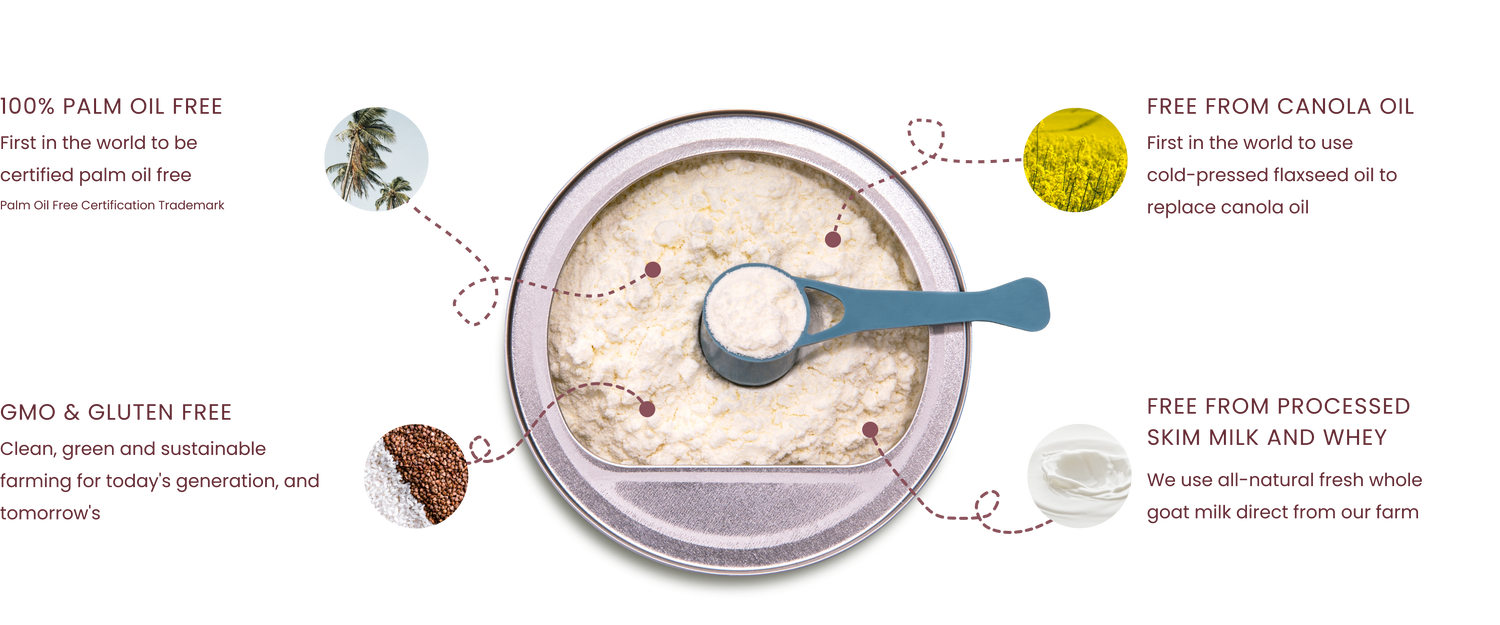
- Goat milk may improve stool consistency and ease constipation following the consumption of cow milk due to its fat structure promoting better fat absorption and softer stools. This is also attributed to the absence of palm oil in the referenced goat milk formula, which is known to contribute to harder stools and reduced fat and calcium absorption.